
Posture is something most people rarely think about until pain starts interfering with daily life. The way we sit, stand, walk, and even sleep has a direct impact on spine health. Everyday posture habits, when repeated over months or years, slowly influence how the spine functions. Poor posture may not cause immediate discomfort, but over time it places extra stress on muscles and joints, leading to stiffness and back strain.
What makes posture problems more concerning is that they often go unnoticed. Small mistakes like slouching, bending the neck forward, or sitting without support gradually overload the spine. Early posture awareness plays a key role in back pain prevention, as correcting habits early can stop minor discomfort from turning into long-term spine issues.
The Connection Between Spine Alignment and Back Strain
The spine is naturally designed with gentle curves that help it carry body weight evenly and absorb daily stress. When posture is correct, muscles, joints, and spinal discs work together efficiently. However, when posture is incorrect, this balance is disturbed. Muscles are forced to overwork, while certain areas of the spine experience excess pressure.
Over time, poor alignment affects spinal discs and surrounding soft tissues, reducing flexibility and increasing stiffness. Prolonged poor posture is one of the most common reasons people experience recurring back strain, even without heavy physical activity. Maintaining proper spine alignment is therefore essential for long-term back pain prevention.
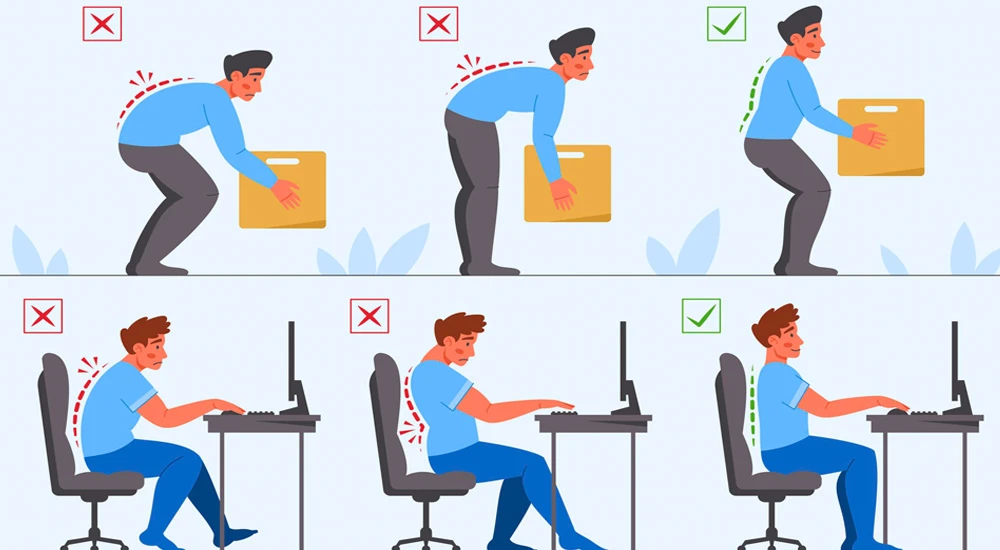
Good Posture And Poor Posture Expained
Good posture:
This means your body stays naturally balanced and supported. Your head is aligned with your spine, shoulders are relaxed, and your back keeps its natural curve while sitting or standing. Feet remain flat on the floor or evenly placed while standing, which helps distribute body weight properly. With good posture, muscles do not get tired quickly, reducing daily back strain and supporting long-term back pain prevention.
Key signs of good posture include:
- Head and neck in a straight line with the spine
- Relaxed shoulders, not hunched
- Proper back support while sitting
- Even weight distribution while standing
Bad posture:
This happens when the body stays in uncomfortable positions for long periods. Slouching on a chair, bending the neck forward to look at screens, leaning on one leg while standing, or sleeping without proper support slowly stresses the spine. These habits overwork certain muscles and weaken others, leading to stiffness and repeated back strain.
Common signs of bad posture include:
- Rounded shoulders and forward head position
- Slouching while sitting or standing
- Uneven weight while standing
- Frequent stiffness or tiredness in the back
In simple terms, good posture supports your spine, while bad posture slowly strains it. Making small posture corrections each day can protect your back and help with back pain prevention over time.
Common Posture Habits That Cause Back Problems
Many daily activities unknowingly harm posture. Sitting for long hours at desks without proper back support is one of the biggest contributors. Excessive mobile phone and screen usage leads to forward head posture, which increases strain on the neck and upper back.
Poor lifting techniques, such as bending from the waist instead of the knees, place sudden stress on the lower back. Incorrect sleeping positions and unsupportive mattresses also affect spinal alignment during rest. Additionally, lack of regular movement keeps muscles stiff and weak, increasing the chances of repeated back strain.

Posture Correction Techniques for Everyday Life
Improving posture requires conscious effort during everyday activities. Sitting posture plays a major role, especially for people with desk jobs. Using a chair with proper back support, keeping feet flat on the floor, and maintaining a neutral spine reduces pressure on the lower back. Screen height should be adjusted so the neck remains aligned, preventing forward bending.
Standing and walking posture is equally important. Standing with balanced weight distribution, relaxed shoulders, and an aligned head helps reduce spinal stress. While lifting objects, bending the knees and keeping the object close to the body protects the spine and reduces the risk of sudden back strain.
Sleeping posture also affects spine health. Sleeping positions that maintain natural spinal curves, along with a supportive mattress and pillow, help the spine recover overnight and support long-term back pain prevention.
Importance of Movement in Back Pain Prevention
The spine is not meant to stay still for long periods. Prolonged sitting or standing without movement increases muscle stiffness and joint pressure. Regular movement breaks throughout the day help improve circulation and reduce muscle fatigue.
Short, frequent breaks combined with gentle stretching and walking allow the spine to stay flexible. This consistent movement pattern plays a crucial role in reducing daily back strain and supporting overall back pain prevention.
Strengthening the Spine: Role of Muscles and Core
Strong muscles are essential for maintaining good posture. Weak core and back muscles fail to support the spine properly, making posture correction difficult. Strengthening exercises help stabilize the spine and reduce unnecessary load on spinal structures.
However, exercises must be performed correctly. For individuals already experiencing back strain, guided and controlled movements are important to avoid worsening symptoms. Proper muscle strengthening significantly improves posture and supports long-term back pain prevention.
Daily Habits That Support Back Pain Prevention
Posture improvement works best when combined with healthy lifestyle habits. Maintaining a healthy weight reduces excess pressure on the spine. Regular physical activity keeps muscles flexible and strong. Stress management is also important, as stress often leads to muscle tension that affects posture.
Adequate hydration supports muscle function and flexibility, indirectly helping reduce stiffness and recurring back strain.
When Posture Correction Is Not Enough
While posture correction helps many people, it is important to understand when professional care is needed. Temporary discomfort usually improves with posture changes and movement. However, persistent pain, increasing stiffness, or symptoms that interfere with daily activities may indicate underlying spine conditions.
When posture correction alone is not enough, early spine evaluation becomes essential. Consulting an experienced spine specialist helps identify the root cause and ensures timely treatment, preventing long-term complications related to back strain.
Conclusion
Improving posture is one of the simplest yet most effective ways to protect your spine. Small daily adjustments, consistent movement, and posture awareness significantly reduce back strain and support long-term back pain prevention. Listening to early signs and seeking timely care can prevent more serious spine problems later.
For persistent posture-related back issues, consulting an experienced spine specialist like Dr. Sohael Khan ensures accurate diagnosis, personalised treatment, and long-term spine health.
Your spine supports you every day, taking care of it today helps you stay active and pain-free tomorrow.
Frequently Asked Questions
Is back pain always related to posture problems?
Not always. While posture is a common cause, back pain can also result from spine conditions, disc problems, or nerve compression. A proper evaluation helps identify the exact cause and supports effective back pain prevention.
Can improving posture help avoid spine surgery?
In many cases, yes. Early posture correction, exercises, and lifestyle changes can reduce stress on the spine and help manage symptoms, lowering the need for surgical intervention.
Are exercises safe for people with existing back strain?
Gentle exercises are often helpful, but they should be performed under guidance if pain is present. Incorrect movements can worsen back strain instead of improving it.
How often should I take breaks while sitting to prevent back pain?
Ideally, short movement or stretching breaks should be taken every 30–45 minutes. Regular breaks reduce muscle stiffness and support long-term back pain prevention.
When should I consult a spine specialist for posture-related pain?
If back pain lasts more than a few weeks, increases with movement, or affects daily activities, consulting a spine specialist is recommended for proper diagnosis and treatment.