
Endoscopic Spine Surgery in Nagpur
Advanced, minimally invasive spine care with faster recovery, less pain, and smaller incisions. Trusted for slip disc, sciatica, and complex spine conditions in Nagpur.
What is Endoscopic Spine Surgery?
Endoscopic Spine Surgery is an advanced minimally invasive spine treatment that uses a small camera (endoscope) and precise surgical instruments to treat spine problems through very small incisions. Compared to traditional open surgery, it causes less damage to muscles and tissues, which means reduced pain, minimal blood loss, and quicker recovery.
This procedure is highly effective for patients suffering from herniated discs (slip disc), sciatica, spinal stenosis, and nerve compression. With faster healing and minimal scars, endoscopic spine surgery has become a trusted choice for patients who want safe, effective, and long-lasting relief from spine disorders.
Symptoms That May Require Endoscopic Spine Surgery
Certain symptoms indicate underlying spine problems that may need surgical attention. If these issues do not improve with conservative treatments, endoscopic spine surgery can provide effective relief. Early diagnosis and treatment are crucial to prevent worsening nerve damage and ensure faster, safer recovery for patients.

Persistent Back Pain
Chronic back pain that lasts for weeks or months and doesn’t improve with rest, medications, or physiotherapy may indicate a spinal disorder. When pain becomes severe and affects daily activities, minimally invasive surgical options can be considered.

Radiating Leg Pain (Sciatica)
A sharp, burning, or shooting pain that travels from the lower back down to the legs often points to nerve compression. Endoscopic surgery can relieve this pressure, offering significant pain reduction and restoring mobility.

Numbness or Tingling Sensations
Loss of sensation, tingling, or a “pins and needles” feeling in the legs or arms suggests nerve irritation or damage. If left untreated, this can worsen and limit normal function, requiring surgical intervention.

Muscle Weakness
Weakness in the legs, arms, or feet due to nerve compression can make walking, lifting, or even standing difficult. Endoscopic spine surgery can help release the pressure on nerves and restore strength.

Difficulty Standing or Walking
Some patients struggle to stand for long or walk short distances without severe discomfort. This often results from spinal stenosis or disc problems that benefit from minimally invasive spine surgery.

Loss of Bladder or Bowel Control
Severe nerve compression in the spine can sometimes affect bladder and bowel control. This is a medical emergency and requires immediate evaluation, often leading to surgical treatment for long-term recovery.

Reduced Flexibility and Stiffness
When stiffness in the back or neck limits flexibility and daily movement, it could be a sign of underlying disc or spine issues. Endoscopic spine surgery helps restore movement with less postoperative downtime.

Pain That Worsens with Activity
Causes of Spine Problems Leading to Endoscopic Spine Surgery
Spine problems requiring surgery often develop due to a combination of lifestyle, age, and genetic factors. Understanding the underlying causes helps in early diagnosis and effective treatment. Endoscopic spine surgery is designed to address these issues with minimal invasion, faster recovery, and long-lasting relief. Identifying the root cause ensures better outcomes and prevents recurrence.

Age-Related Degeneration
As we age, spinal discs lose water content and elasticity, making them more prone to wear and tear. This can lead to herniated discs, nerve compression, and other spine issues that may require surgical intervention.

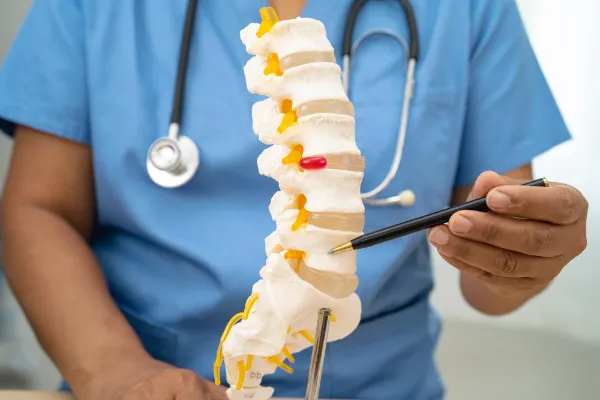
Herniated or Bulging Discs
Discs can bulge or rupture due to sudden strain, injury, or gradual degeneration. When the inner disc presses on nearby nerves, it can cause pain, numbness, and mobility issues that may require endoscopic surgery.
Spinal Stenosis
Spinal stenosis occurs when the spinal canal narrows, putting pressure on the nerves. This condition often causes leg pain, numbness, or weakness, which may not respond to conservative treatments alone.

Trauma or Injury
Accidents, falls, or sports-related injuries can damage vertebrae, discs, or ligaments. Severe injuries may compress nerves or destabilize the spine, necessitating surgical correction.

Repetitive Strain
Frequent bending, lifting, or prolonged sitting can place continuous stress on the spine. Over time, this repeated strain can weaken discs and vertebrae, contributing to chronic back pain and nerve irritation.

Genetic Factors
Family history can influence disc strength, spinal alignment, and susceptibility to degenerative spine conditions. Individuals with a genetic predisposition may develop spine problems earlier or more severely.
Treatment Options for Endoscopic Spine Surgery in Nagpur
Endoscopic spine surgery provides minimally invasive solutions for various spine problems, offering faster recovery, smaller incisions, and reduced post-operative pain. Depending on the patient’s condition, the following advanced treatments may be recommended by Dr. Sohael Khan in Nagpur:
1. Endoscopic Discectomy
A minimally invasive procedure to remove herniated or damaged disc material pressing on nerves. It relieves leg or back pain while preserving surrounding spinal structures.
2. Endoscopic Foraminotomy
This technique enlarges the foraminal space through which spinal nerves pass. It relieves nerve compression, reducing pain, numbness, and weakness in the limbs.
3. Endoscopic Laminectomy
A small portion of the vertebra is removed to relieve pressure on the spinal cord or nerves. This procedure is effective for spinal stenosis and other nerve-compression conditions.
4. Endoscopic Spinal Fusion (Selected Cases)
Two or more vertebrae are joined using minimally invasive techniques to stabilize the spine. This surgery is recommended for severe instability or degenerative conditions.
5. Endoscopic Disc Replacement
Damaged discs are replaced with artificial implants to maintain spinal motion and alignment. This option is ideal for patients looking to avoid traditional spinal fusion.
6. Endoscopic Decompression for Nerve Impingement
Specialized instruments are used to remove tissue or bone that compresses spinal nerves. It provides relief from persistent pain, tingling, and weakness in the back and legs.
Recovery After Endoscopic Spine Surgery
Recovery after endoscopic spine surgery depends on the complexity of the procedure and the patient’s overall health. Most patients experience less pain, smaller scars, and a faster return to daily activities compared to traditional open surgery. Following post-operative guidelines ensures safe and effective healing while minimizing complications.
Key Recovery Guidelines:
- Gentle Activity: Light walking and stretching prevent stiffness while avoiding strenuous movements.
- Physiotherapy: Targeted exercises help restore flexibility, strength, and spinal stability.
- Medication Management: Pain relievers and anti-inflammatory drugs should be taken as prescribed.
- Lifestyle Modifications: Maintain good posture, avoid prolonged sitting, and follow ergonomic practices.
- Healthy Habits: Balanced diet, hydration, and weight management reduce stress on the spine.
- Follow-Up Care: Attend scheduled check-ups to monitor healing and progress, and gradually resume normal activities under medical supervision.
Get Advanced Endoscopic Spine Surgery in Nagpur
Frequently Asked Questions
Endoscopic surgery uses tiny incisions and a camera to treat spine problems, causing less tissue damage, less pain, and faster recovery compared to open surgery.
Patients with herniated discs, spinal stenosis, nerve compression, or persistent back and leg pain that does not respond to conservative treatment may benefit from this minimally invasive procedure.
Most endoscopic procedures are completed within 1 – 3 hours, depending on the complexity, allowing many patients to go home the same day or within 24 hours.
While it is minimally invasive, potential risks include infection, nerve injury, or incomplete symptom relief. However, the risks are generally lower than traditional spine surgery.
Many patients resume light activities within a few days, while more physically demanding work may require 2 – 4 weeks. Your doctor will provide a personalized recovery plan.
Yes, physiotherapy is important to strengthen back muscles, restore flexibility, and maintain spinal stability, reducing the risk of future spine problems.
Recurrence is possible if underlying causes like poor posture, heavy lifting, or weak core muscles are not addressed. Following lifestyle advice and rehabilitation exercises can help prevent it.