
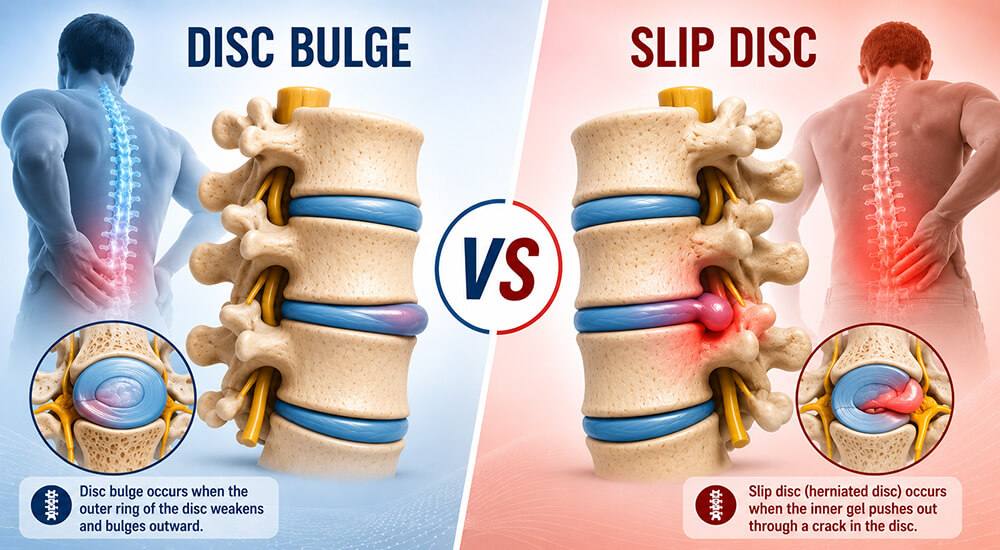
Back pain is one of the most common health concerns today, especially among people with long sitting hours, physically demanding jobs, or age related spine degeneration. During diagnosis, many patients come across terms like disc bulge, slip disc, herniated disc, or disc protrusion and often assume they all mean the same thing. In reality, there are important differences between these spinal conditions.
Understanding the distinction between Disc Bulge vs Slip Disc can help patients recognise symptoms early, seek appropriate treatment, and avoid unnecessary fear or confusion. While both conditions involve spinal discs and may cause lower back pain, their severity, symptoms, and treatment approaches can vary significantly.
Understanding the Role of Spinal Discs
The spine is made up of vertebrae separated by soft cushioning discs that act as shock absorbers during movement. These discs help the spine remain flexible while reducing pressure during walking, bending, or lifting.
Each disc contains a soft inner centre surrounded by a tougher outer layer. With age, repetitive strain, poor posture, or injury, these discs can weaken and develop problems such as bulging or herniation. When the affected disc begins pressing on nearby nerves, symptoms like pain, numbness, or weakness may occur.
What Is a Disc Bulge
A disc bulge occurs when the outer layer of the spinal disc weakens and extends outward beyond its normal boundary. However, the inner gel-like material usually remains contained within the disc.
In many cases, a bulging disc may not cause severe symptoms initially. Some individuals may experience mild lower back pain, stiffness, or occasional discomfort while sitting or bending. Disc bulges are often associated with gradual wear and tear or spinal disc degeneration over time.
Because the disc structure is still relatively intact, many bulging disc cases respond well to physiotherapy, posture correction, exercise, and lifestyle modifications.
What Is a Slip Disc
A slip disc, also known as a herniated disc, happens when the inner portion of the disc pushes through a tear in the outer layer. This condition is usually more severe because the leaked disc material can directly compress nearby spinal nerves.
Patients with slip disc often experience sharper symptoms such as severe lower back pain, pain radiating to the leg, numbness, tingling, or muscle weakness. Sciatica pain is commonly associated with slip disc because the affected nerve becomes irritated or compressed.
Unlike mild disc bulges, slip disc symptoms may significantly interfere with walking, sitting, sleeping, or daily activities if left untreated.
Disc Bulge vs Slip Disc Symptoms
Although both conditions involve spinal disc problems, their symptoms can differ depending on the level of nerve compression and disc damage.
Symptoms Common in Disc Bulge
- Mild lower back pain
- Muscle stiffness
- Discomfort after prolonged sitting
- Occasional restricted movement
Symptoms Common in Slip Disc
- Sharp or radiating leg pain
- Tingling or numbness in legs
- Weakness in muscles
- Difficulty walking or standing for long periods
Slip disc symptoms are generally more intense because nerve compression is usually greater compared to a simple disc bulge.
Can a Disc Bulge Become a Slip Disc
Yes, in some cases, a bulging disc can gradually progress into a slip disc if excessive strain, poor posture, heavy lifting, or untreated degeneration continues over time.
Ignoring persistent back pain, continuing repetitive movements, or delaying medical attention may increase the risk of worsening disc damage. Early diagnosis and preventive care play a major role in stopping progression and reducing long term complications.
Causes of Disc Bulge and Slip Disc
Several factors contribute to spinal disc problems.
Age Related Degeneration
As people age, spinal discs lose hydration and flexibility, making them more prone to damage.
Poor Posture and Sedentary Lifestyle
Long sitting hours and improper posture place extra stress on the lumbar spine.
Heavy Lifting or Sudden Injury
Incorrect lifting techniques or sudden twisting movements can increase pressure on spinal discs.
Weak Core Muscles
Lack of spinal support from surrounding muscles can increase strain on the lower back.
Treatment Options for Disc Bulge and Slip Disc
Treatment depends on symptom severity, nerve involvement, and overall functional limitation.
Non Surgical Treatment
Most mild to moderate cases improve with:
- Physiotherapy
- Pain management
- Posture correction
- Core strengthening exercises
- Lifestyle modification
Advanced Spine Treatment
When symptoms become severe or neurological weakness develops, advanced treatments such as minimally invasive spine surgery or endoscopic procedures may be considered.
Early consultation with a spine specialist helps identify the most suitable treatment plan before symptoms worsen.
When Should You See a Spine Specialist
Medical evaluation becomes important if back pain persists for several weeks or is associated with numbness, weakness, or pain radiating to the legs. Difficulty sitting, standing, or walking comfortably may indicate nerve compression requiring proper diagnosis.
Ignoring these symptoms can increase the risk of long term spinal problems and delayed recovery.
Conclusion
Understanding the difference between Disc Bulge vs Slip Disc is important for recognising symptoms early and seeking the right treatment at the right time. While both conditions involve spinal discs, their severity and impact on nerve structures can vary significantly. Early diagnosis, posture correction, physiotherapy, and timely medical care can help prevent progression and support long term spine health.
With expertise in advanced spine care and minimally invasive treatment approaches, Dr. Sohael Khan focuses on accurate diagnosis, personalised treatment planning, and patient centred care for spinal disc conditions. Timely consultation and guided rehabilitation can help patients regain mobility, reduce pain, and improve overall quality of life.
Frequently Asked Questions
What is the difference between disc bulge and slip disc
A disc bulge involves outward extension of the disc without rupture, while a slip disc occurs when the inner disc material pushes through a tear and compresses nearby nerves.
Is disc bulge the same as slip disc
No, both conditions affect spinal discs but differ in severity and nerve involvement.
Can a disc bulge heal naturally
Many mild disc bulges improve with physiotherapy, exercise, posture correction, and lifestyle changes.
What are common slip disc symptoms
Slip disc symptoms often include severe lower back pain, sciatica, numbness, tingling, and muscle weakness.
When should I consult a spine specialist for disc problems
You should seek medical evaluation if pain persists for weeks or is associated with numbness, weakness, or difficulty walking.