
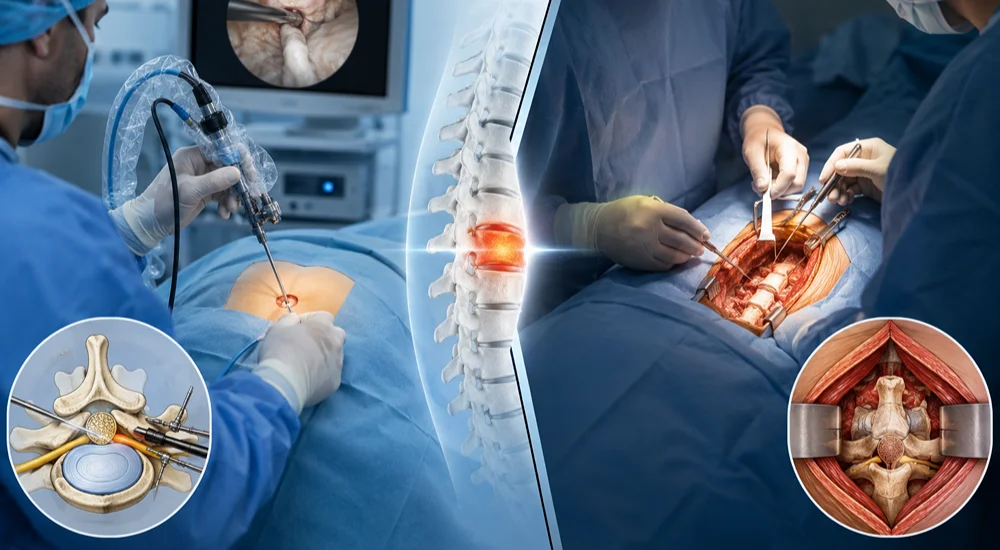
Spine surgery has evolved significantly over the years. Earlier, traditional open procedures were the standard approach for treating conditions like slip disc, spinal stenosis, and nerve compression. Today, advanced techniques such as Endoscopic Spine Surgery are changing the way spine problems are managed by offering smaller incisions, faster recovery, and reduced post operative discomfort.
For many patients, deciding between traditional and endoscopic surgery can feel confusing. Understanding how both procedures differ and when each approach is recommended can help patients make more informed decisions about their spine health and treatment journey.
What Is Endoscopic Spine Surgery
Endoscopic Spine Surgery is a modern minimally invasive spine procedure performed using a high definition camera and specialised surgical instruments. Instead of making large cuts, the surgeon accesses the affected area through a very small incision while viewing the spine on a monitor in real time.
This technique is commonly used for conditions such as slip disc, nerve compression, sciatica, and selected cases of spinal stenosis. Because surrounding muscles and tissues are preserved to a greater extent, patients often experience quicker recovery and less surgical trauma compared to traditional surgery.
Understanding Traditional Spine Surgery
Traditional spine surgery usually involves a larger incision to provide direct access to the spine. This method may still be necessary in certain complex conditions involving severe instability, deformity, fractures, or extensive spinal damage.
Although traditional techniques have helped many patients successfully over the years, they generally involve more muscle dissection, longer hospital stay, and extended recovery periods. Recovery can vary depending on the complexity of the surgery and the patient’s overall health condition.
Key Differences Between Endoscopic and Traditional Spine Surgery
Both procedures aim to relieve pain and restore spinal function, but the surgical approach and recovery experience can differ significantly.
Incision Size and Tissue Damage
One of the biggest advantages of Endoscopic Spine Surgery is the use of very small incisions. Minimal tissue disruption helps preserve surrounding muscles and reduces surgical trauma. Traditional surgery, on the other hand, often requires larger cuts that may lead to greater muscle damage and post operative discomfort.
Recovery and Hospital Stay
Patients undergoing endoscopic procedures are often able to walk earlier and may return home sooner. Faster recovery allows many individuals to resume routine activities within a shorter period. Traditional spine surgery may require longer hospitalisation and more extensive rehabilitation depending on the procedure.
Post Operative Pain and Scarring
Because endoscopic procedures involve smaller incisions, patients generally experience less pain after surgery and smaller visible scars. Reduced tissue injury also lowers the need for prolonged pain medication during recovery.
Surgical Precision
Modern camera guided systems provide magnified visualisation of the affected spinal structures. This allows surgeons to target the exact problem area with greater accuracy while preserving healthy tissues nearby.
Benefits of Endoscopic Spine Surgery
The growing popularity of Endoscopic Spine Surgery is largely due to the advantages it offers for selected spine conditions. Its minimally invasive approach focuses on reducing surgical trauma while improving recovery experience and overall patient comfort.
Faster Return to Daily Activities
Many patients can resume light activities and office work sooner because recovery is generally quicker compared to traditional open procedures. Early mobilisation also helps improve confidence and reduces the physical impact of prolonged bed rest.
Reduced Blood Loss and Lower Infection Risk
Smaller surgical exposure often results in less bleeding and reduced chances of post operative infection. This makes the procedure especially beneficial for elderly patients or individuals with additional health concerns.
Better Patient Comfort During Recovery
Less tissue damage means patients may experience reduced stiffness, improved mobility, and greater comfort after surgery. Shorter recovery periods also allow patients to return to normal routines with less physical and emotional stress.
Improved Cosmetic Outcome
Smaller incisions leave minimal scarring, which many patients consider an additional benefit. Reduced scar formation can also contribute to better healing and improved patient satisfaction after surgery.
When Is Traditional Spine Surgery Still Necessary
Despite the benefits of minimally invasive procedures, traditional surgery still plays an important role in spine care. Certain conditions involving major deformity correction, severe spinal instability, tumours, or extensive fractures may require open surgical techniques for better visualisation and structural repair.
The choice between procedures depends on accurate diagnosis, MRI findings, patient health status, and the surgeon’s clinical assessment.
Recovery After Endoscopic Spine Surgery
Recovery timelines can vary based on the severity of the condition and the type of procedure performed. Most patients are encouraged to begin gentle walking soon after surgery to improve circulation and reduce stiffness.
Physiotherapy and guided rehabilitation help strengthen muscles, improve posture, and support long term spine stability. Following medical advice regarding sitting posture, lifting restrictions, and activity progression is essential for achieving the best possible outcome.
Is Endoscopic Spine Surgery Safe
When performed by an experienced spine specialist, Endoscopic Spine Surgery is generally considered safe and effective for selected conditions. Advancements in surgical technology, imaging systems, and precision instruments have significantly improved treatment outcomes.
However, every surgical procedure carries some risks, and not every patient may be an ideal candidate for endoscopic treatment. Proper evaluation and personalised treatment planning are essential before deciding the most suitable approach.
Choosing the Right Spine Specialist
The success of any spine procedure depends greatly on the expertise of the surgeon and the accuracy of diagnosis. Patients should look for a spine specialist with experience in advanced minimally invasive and endoscopic techniques, along with a patient focused treatment approach.
Clear communication, realistic recovery guidance, and comprehensive rehabilitation support also play an important role in overall treatment success.
Conclusion
Both traditional and endoscopic spine procedures have their place in modern spine care. While Endoscopic Spine Surgery offers advantages such as smaller incisions, quicker recovery, and reduced discomfort, the right treatment depends on the individual condition and overall spine health of the patient. Early diagnosis and timely medical consultation are important for preventing complications and improving long term outcomes.
With expertise in advanced minimally invasive and endoscopic spine procedures, Dr. Sohael Khan focuses on precise diagnosis, personalised treatment planning, and patient centred spine care. His approach aims to help patients achieve effective pain relief, improved mobility, and faster recovery while choosing the safest and most appropriate treatment option for their condition.
Frequently Asked Questions
What is Endoscopic Spine Surgery used for?
Endoscopic Spine Surgery is commonly used to treat slip disc, nerve compression, sciatica, and selected spinal stenosis cases.
Is Endoscopic Spine Surgery better than traditional surgery?
For selected patients, it may offer benefits such as smaller incisions, faster recovery, and less post operative pain compared to traditional surgery.
How long does recovery after Endoscopic Spine Surgery take?
Many patients resume light activities within a few weeks, although recovery time depends on the condition and rehabilitation progress.
Is Endoscopic Spine Surgery painful?
Because the procedure involves minimal tissue damage, patients generally experience less pain during recovery compared to open surgery.
Who is eligible for Endoscopic Spine Surgery?
Eligibility depends on the type and severity of the spine condition, MRI findings, and overall health evaluation by a spine specialist.