
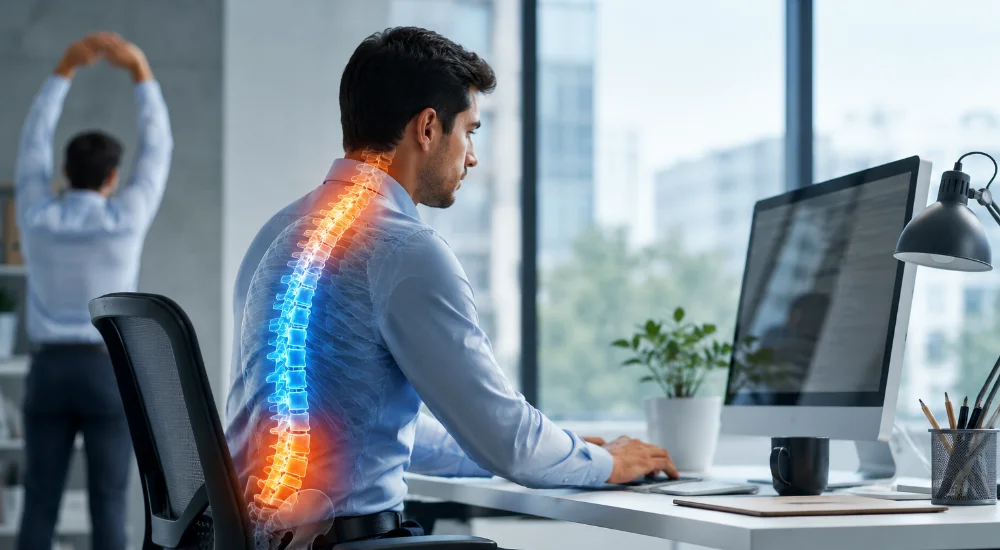
In today’s digital world, most of us spend a significant part of our day sitting. Whether it’s working at a desk, driving through traffic, attending online meetings, or scrolling through our phones, sitting has become an unavoidable part of modern life. While it may seem harmless, prolonged sitting can have serious consequences for your spine and overall health.
As a spine surgeon, I frequently see patients whose back and neck problems are directly linked to sedentary lifestyles. This is why many health experts now refer to prolonged sitting as “the new smoking.”
Why Is Sitting Such a Concern?
The human body is designed to move. When we remain seated for long periods, our muscles, joints, and spine are placed under constant stress. Unlike walking or standing, sitting keeps certain muscles inactive while placing increased pressure on the spinal discs.
Over time, this can lead to poor posture, muscle weakness, reduced flexibility, and chronic pain. Research has also shown that prolonged sitting is associated with increased risks of obesity, cardiovascular disease, and other health concerns.
What Happens to Your Spine When You Sit All Day?
When you sit for hours without taking breaks, several changes begin to occur in your body.
The gluteal muscles become weaker because they are not actively engaged. Hip flexors become tight and shortened, which can alter posture and place additional strain on the lower back. The spinal discs experience uneven pressure and reduced fluid exchange, making them more vulnerable to degeneration.
As these changes progress, many people begin experiencing symptoms such as:
- Lower back pain
- Neck stiffness
- Sciatica and nerve irritation
- Rounded shoulders
- Poor posture or “tech neck”
- Reduced mobility
These symptoms often start gradually but can become persistent if left unaddressed.
Can Exercise Alone Solve the Problem?
Many people believe that a daily workout is enough to counteract the effects of sitting. While regular exercise is extremely beneficial, it cannot completely undo the impact of sitting for ten or more hours each day.
The key is not only exercising regularly but also reducing uninterrupted sitting time. Even short movement breaks throughout the day can make a meaningful difference to spinal health.
Experts recommend standing, stretching, or walking for a few minutes every 30 to 45 minutes. These small breaks help improve circulation, reduce muscle stiffness, and relieve pressure on the spine.
Simple Ways to Protect Your Spine
Protecting your spine doesn’t require drastic lifestyle changes. Small adjustments can have a significant impact over time.
Consider standing during phone calls, using a sit-stand workstation when possible, adjusting your screen to eye level, and incorporating simple strengthening exercises into your daily routine. Exercises that target the core and glute muscles can help improve posture and provide better support for the spine.
When Should You Seek Medical Advice?
Occasional discomfort is common, but persistent symptoms should never be ignored. If you experience ongoing back pain, numbness or tingling in the legs, pain that disrupts sleep, or difficulty standing upright after sitting, it may be time to consult a spine specialist.
Early intervention often helps prevent minor issues from developing into more serious spine conditions.
Conclusion
Sitting itself is not the enemy, but excessive sitting without movement can take a significant toll on your spine. The good news is that simple habits such as standing more often, stretching regularly, and staying physically active can help protect your back and maintain long-term spinal health.
Remember, your spine supports you every day. Taking a few minutes to move throughout the day can make a lasting difference to your health, mobility, and quality of life.